


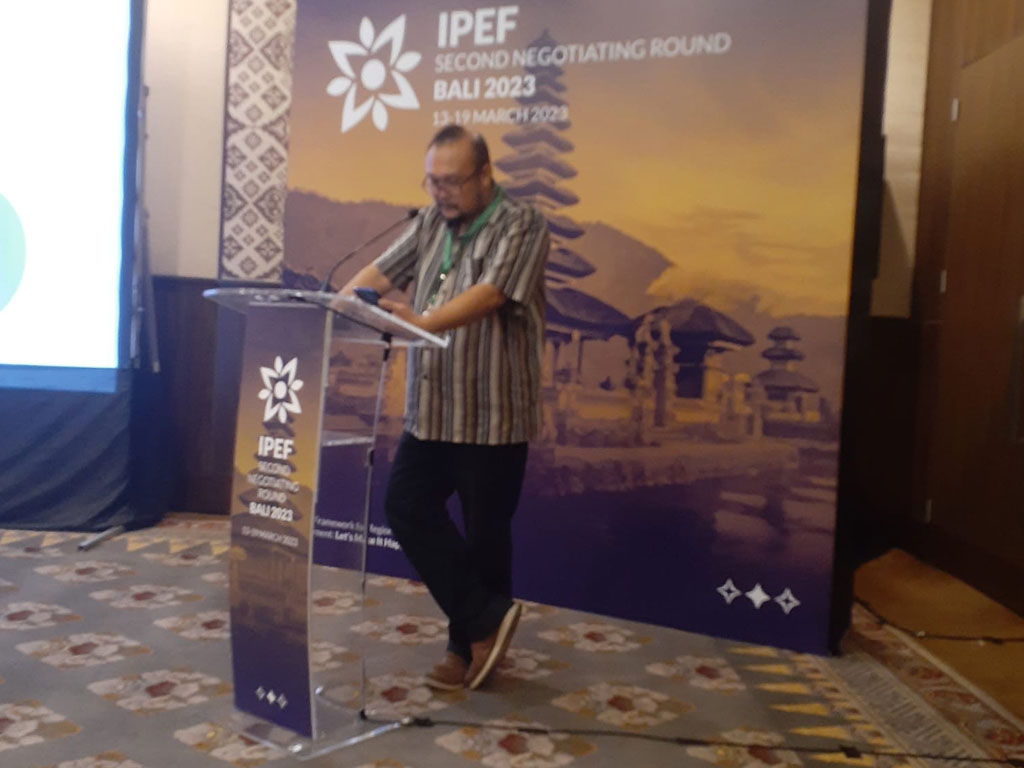
In the last decade, we have paid close attention to developments in global trade, especially regarding digital developments. We see that the rapid development of digital facilities in the last 20 years has provided a great opportunity for people to carry out the development they need and put their hopes for the future. For governments in developing countries, digital facilities are a major opportunity to significantly provide public services and catch up on the development of those who have been lagging behind so far. Prosperity, justice, humanity, improvement of the environment and climate, should be the main goals in digital utilization and development.
But,
Learning from the US proposal on TPP (which changed to CPTPP), there are several provisions that need attention:
Cross Border Data Flow
The wide application of CBDF, without any restrictions, has had many impacts. One of them is related to law enforcement for violations committed by companies outside the jurisdiction. This clearly makes a loss to society and the country. On the contrary, it opens up opportunities for large corporations to make profits but create societal damage and economic loss.
Massive and exploitative data collection as well as data colonization is another form facilitated by the CBDF which harms society and prolongs the backwardness and dependence of developing countries.
The complete prohibition of data localization rules has eliminated the data sovereignty of a nation and state, especially in the protection of sensitive data including economic and personal data in it.
Source Code
Excessive protection of source code and algorithms, in the end only provides a wide scope for violations and closes control over the enforcement of rules that have been carried out through a democratic process according to the interests of the people of a nation. Various discriminatory biases, violations of general rules and regulations and other laws.
Customs duties on electronic transmissions
The absence of provisions for withdrawing electronic transmission taxes, in the end, only allows taxes to be collected by one country against another. Theft of this tax will disrupt the development process, especially for developing countries. Meanwhile, many developing countries through the global system have been forced to depend on their country’s resources from taxes.
The digital transition process in each country is looking for its shape, it should have a humane regulatory space in accordance with the character and environment of each nation and be implemented democratically. Instead of giving big companies the opportunity to rule and control, thus creating a digital environment that is inhumane, exploitative and undemocratic.
What do we see in digital developments in Indonesia?
We see millions of online transportation workers working with their own capital, working at high risk and borne by themselves, do not have rights as workers, do not have sufficient guarantees.
We see millions of MSMEs putting their hopes through digital facilities to gain market access where they could not enter before. However, access to this very wide open market is also open to MSMEs from developed countries. This ultimately poses a counter threat to SMEs in developing countries.
We see tens of millions of consumers who actively gain access to goods are being monitored and studied for their behavior in great detail and intensely. Mastery of data, information and knowledge, will be a threat of dependence and control through data colonialization.
While all of this is running, data service providers, applications, servers and others, who are outside national boundaries, benefit greatly from the absence of restrictions that require data to reside within the country. Great advantage of the commodification of the data they have collected. The ban requires the data to reside within the country. Company profits should be taxed by the country of origin.
If IPEF only considers company profits, then we should stop trade and economic agreements that are inhumane and do not make the world a better place.