• Call: +62
  • E-mail: sahita.institute@hints.id
Sahita Institure
  • Home
  • About Us
  • Campaign
    • Trade Justice
    • Digital Justice
    • Energy Transtition
  • Collective Idea
    • Visual Movement
    • Article
  • News
  • Publication
No Result
View All Result
Sahita Institute
No Result
View All Result

IPEF is only to save US corporations from crisis while continue to eliminate people’s rights

January 30, 2024
in Campaign, Trade Justice
Home Campaign
Share on FacebookShare on Twitter

Press Release
Responding to IPEF Negotiation Round
15 March 2023

Jakarta, 15 March 2023. Indonesian Civil Society Coalition for Economic Justice held a protest today in front of the US Embassy in Jakarta to express its rejection of the Indo-Pacific Economic Framework (IPEF). In the midst of the global economic crisis, the United States is trying to rebuild its national industrialisation with a less open free trade agreement and push for policy harmonisation based on US standards. The IPEF will hold its second round of negotiations in Bali from 13-19 March 2023.

IPEF was initiated by the United States in September 2022 as a new model of regional free trade agreement involving 13 other partner countries.  The IPEF includes four pillars: (1) trade; (2) supply chain; (3) clean energy, decarbonisation, and infrastructure; and (4) taxation and anti-corruption.  The US government is targeting the completion of the negotiations this year to coincide with the APEC Summit to be held in San Francisco in November 2023. 

Director of Indonesia for Global Justice, Rahmat Maulana Sidik emphasised that the IPEF negotiation process was led by the US, including the drafting of the agreement text, in a closed manner. “With the short period of time and the closed draft text of the agreement to the public, it is certain that there is no meaningful participation by partner countries to provide their input in this agreement process. Moreover, to analyse the social, environmental, and gender impacts that will potentially arise,” he said. US domination of the IPEF process was also exercised through deciding the location for the negotiation rounds and the involvement of US-based multinational companies in the hearing process.

Kartini Samon of GRAIN stated that the Biden administration manoeuvred to avoid debate and resistance from the US Congress by not including market access provisions or tariff reductions and avoiding changes to domestic laws. Following the launch of the IPEF, the US Government released a report containing a priority list for the reduction of non-tariff barriers that will be promoted through the IPEF through the harmonisation of a number of policies and regulations that are seen as technical barriers to trade with the United States. “For Indonesia itself, this policy harmonisation effort through IPEF can cause problems and widespread impacts. In the agricultural sector, for example, efforts to harmonise technical barriers to trade could oblige Indonesia to relax domestic regulations related to the commercialisation and import of genetically modified seeds and food products. This, of course, would greatly benefit the US, which hosts a number of giant producers of genetically modified products. Besides the provisions related to genetically modified products, another rule that is seen as a technical barrier that will be pushed for harmonisation is the mandatory halal certification for imports of livestock products, considering that only 3 out of 14 IPEF member countries have this obligation; Brunei, Malaysia and Indonesia. Harmonisation of halal certification could directly affect livestock farmers and abattoirs as well as consumers in Indonesia,” said Kartini Samon.

Meanwhile, Arie Kurniawaty representing Solidaritas Perempuan stated that IPEF will be the first mega-regional economic agreement for the US, involving 40% of the world’s GDP will produce new rules, processes and commitments that to secure US trade and investment interests to offset China’s dominance, political and military influence in the Asia-Pacific region. “The IPEF is not, and will never be, just about economic trade. Rather, it is a chain of hegemonic power domination for the US, it is like a continuation of the cold war that always harms the sovereignty of nations and the human rights of Asian women and people as developing countries.” she said.  

IPEF uses language that seems to be in favour and good for the interests of sustainable development, such as clean energy being one of the pillars. In fact, this provision is only used by the US to strengthen US domestic industrial development related to the production of green technology for energy transition. Rachmi Hertanti from Transnational Institute stated “The US wants to keep pace with China to become a major player in the production of green technology for energy transition. It is highly unlikely that IPEF will bring US investment into Indonesia to support Indonesia’s industrial downstream agenda. And this precludes Indonesia from benefiting from this co-operation. As a result, the IPEF will only contradict Indonesia’s national interests.

Marthin Hadiwinata from Ekomarin closed with the statement that the fisheries sector in the trade pillar discussed in the IPEF will regulate the prohibition of subsidies in the sector. The rationale for this is that subsidies are considered to encourage uncontrolled exploitation of fisheries resources. Therefore, Indonesia’s domestic regulations that still provide subsidies will be intervened. “The majority of fisherfolks in Indonesia are small and medium scale. Removal of subsidies in the fisheries sector will clearly hamper Indonesian fisherfolks. This will be an obstacle for developing countries like Indonesia to maintain domestic rules, which has also been done in the WTO reform negotiations,” he said.

Contacts for further information:

Arie Kurniawaty – Solidaritas Perempuan,
+62 812 8056 4651

Rahmat Maulana Sidik – Indonesia for Global Justice
+62 812 0025 135

Previous Post

Series Activities : Respon to US-IPEF

Next Post

Sahita Institute Oral Intervention at the 2nd round of Indo-Pacific Economic Framework (IPEF) negotiations

admin_hints

admin_hints

Discussion about this post

Follow Us

  • Perdagangan global bukan cuma soal ekspor, impor, atau angka pertumbuhan ekonomi. Ada kepentingan besar, perebutan pengaruh, dan relasi kuasa yang ikut menentukan siapa yang diuntungkan dan siapa yang berisiko tertinggal.

Lewat dialog publik “Perdagangan Bebas di Persimpangan Jalan: Kebangkitan Nasionalisme Ekonomi dan Masa Depan WTO”, kita diajak melihat lebih kritis arah perdagangan dunia di tengah rivalitas negara-negara besar dan menguatnya proteksionisme.

#PerdaganganBebas #WTO #KeadilanEkonomi #KedaulatanEkonomi #RuangKebijakan
  • Perdagangan internasional kini tidak hanya dipandang sebagai instrumen efisiensi ekonomi, tetapi juga bagian dari strategi negara dalam melindungi kepentingan nasional dan keamanan ekonomi. Menguatnya nasionalisme ekonomi, proteksionisme, dan economic statecraft, termasuk perang dagang AS–Tiongkok, memunculkan pertanyaan mendasar: apakah perdagangan bebas sedang mengalami kemunduran, atau justru bertransformasi menjadi sistem yang semakin selektif dan strategis?

Di tengah perubahan tersebut, relevansi dan kapasitas WTO dalam menjaga sistem perdagangan multilateral berbasis aturan ikut dipertanyakan, terutama bagi negara berkembang seperti Indonesia yang membutuhkan ruang kebijakan (policy space) untuk pembangunan. 

Kegiatan dialog publik ini diselenggarakan oleh Fakultas HI Universitas Diponegoro bekerja sama dengan Koalisi Masyarakat Sipil untuk Keadilan Ekonomi (MKE), diharapkan dapat menjadi ruang diskusi kritis bagi akademisi, praktisi, dan masyarakat sipil untuk membahas isu tersebut.

Dengan ini kami mengundang Bapak/Ibu/rekan-rekan anggota Koalisi MKE untuk hadir pada:

📌 *Dialog Publik: Perdagangan Bebas di Persimpangan Jalan: Kebangkitan Nasionalisme Ekonomi dan Masa Depan WTO*
🗓️ Hari/Tanggal: Rabu, 21 Oktober 2026
⏰ Waktu: 13.00 WIB - selesai
📍 Tempat: Ruang Teater, Fakultas Ilmu Sosial dan Ilmu Politik, Universitas Diponegoro, Semarang

Terima kasih atas perhatian dan kehadirannya.

#KoalisiMKE #KeadilanEkonomi #UniversitasDiponegoro #UNDIP #AkademisiDanMasyarakatSipil
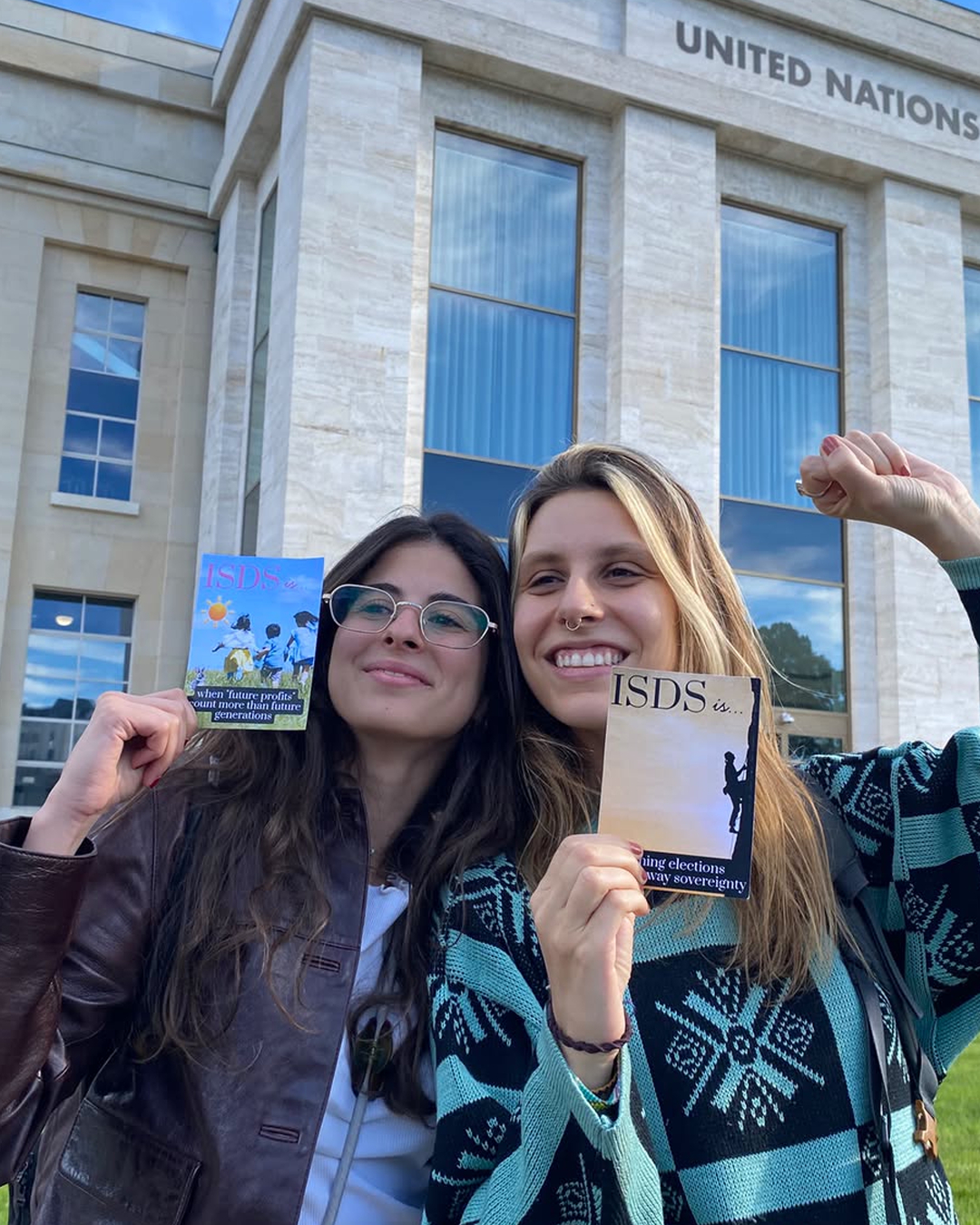
  • Here are a few glimpses of resistance from around the world.
ISDS threatens public policy space, social justice, and environmental protection. Let’s unite our voices during the **Global Action Days Against ISDS!*

#IsdsOutClimateJusticeIn #ISDSThreatensOurPlanet #ClimateJustice #StopISDS #ISDSfree

@pwypindonesia @resourcejusticenetwork @thirdworldnetwork @publicservicesinternational @lciti.fhui @pacificnetworkonglobalisation @aftinet @focussouth @bilaterals_org @powershift_ev
  • ISDS THREATENS OUR PLANET – PART 5

Video 5 - ISDS Attacks the Marine Environment 

Getting paid billions without even mining? Welcome to the reality of ISDS. ☣️

Even when governments enforce international marine protections—like UNCLOS—foreign investors can use complex corporate web structures to sue for "lost future profits". 🤯🙄

Corporations can extract millions from public coffers simply because a country chooses to protect its ocean. 🌊 

We can NOT allow secretive trade mechanisms to exploit our oceans and public money.

Join us to fight against corporate power through www.stopsids.global

Stay tuned for the next parts as we reveal how ISDS threatens our planet!

#IsdsOutClimateJusticeIn #ISDSThreatensOurPlanet #ClimateJustice #StopISDS #ISDSfree

@pwypindonesia @resourcejusticenetwork @thirdworldnetwork @publicservicesinternational @lciti.fhui @pacificnetworkonglobalisation @aftinet @focussouth @bilaterals_org @powershift_ev
  • ISDS THREATENS OUR PLANET – PART 4

Is it possible to stop ISDS? ⛓️‍💥⛔️

Absolutely—and countries are already doing it! 🌍

From Indonesia and India terminated outdated bilateral investment treaties, to Germany exiting the Energy Charter Treaty, governments worldwide are realizing the danger of corporate courts. 😵✊🏽

Our Governments must STOP fearing corporate scaremongering.

Evidence shows foreign investment relies on resources, market size, and infrastructure—not ISDS clauses.

We call on governments to stand firm, exit toxic investment treaties, and protect national policy space! 🚨

Join us to fight against corporate power through www.stopsids.global

Stay tuned for the next parts as we reveal how ISDS threatens our planet!
#IsdsOutClimateJusticeIn #ISDSThreatensOurPlanet #ClimateJustice #StopISDS #ISDSfree

@pwypindonesia @resourcejusticenetwork @thirdworldnetwork @publicservicesinternational @lciti.fhui  @pacificnetworkonglobalisation @aftinet @focussouth @bilaterals_org @powershift_ev
  • ISDS THREATENS OUR PLANET – PART 3

Resource sovereignty is under attack. 🛘‼️

As the race for critical minerals speeds up, Global South countries are facing the risks of ISDS.

When Governments enact raw material export bans, enforce local processing, or protect indigenous lands, multinational corporations use ISDS to sue for billions of US dollars. 💸 

In countries like Indonesia and the Philippines, these corporate threats hold indigenous rights, environmental protections, and national policies hostage. 😵

Therefore, we demand an end to investment treaties with ISDS permanently and prioritize community rights over corporate greed! 🫵🏼✊🏽

Join us to fight against corporate power through www.stopsids.global

Stay tuned for the next parts as we reveal how ISDS threatens our planet!

#IsdsOutClimateJusticeIn #ISDSThreatensOurPlanet #ClimateJustice #StopISDS #ISDSfree

@pwypindonesia @resourcejusticenetwork @thirdworldnetwork @publicservicesinternational @lciti.fhui  @pacificnetworkonglobalisation @aftinet @focussouth @bilaterals_org @powershift_ev
  • ISDS THREATENS OUR PLANET – PART 2

ISDS Attacks Tax Justice 

Who pays the price when your Government is being sued through ISDS? YOU do. 💸😰

Fossil fuel corporations often seek tax avoidance, when Governments ask for them to pay–they’re threatened with ISDS claims.

When corporations use ISDS to attack national policies, Government budgets take a massive hit.

Losing an ISDS case or even paying high-powered legal teams to defend against one, drains public funds that belong to the people. 💰👥

Fewer public funds means reduced budget for important public services such as healthcare, education, and social security programs. ⛓️‍💥📉

ISDS doesn’t just protect investors but it actively steals communities of their rights to public services. 🥷

Join us to fight against corporate power through www.stopsids.global

Stay tuned for the next parts as we reveal how ISDS threatens our planet!

#IsdsOutClimateJusticeIn #ISDSThreatensOurPlanet #ClimateJustice #StopISDS #ISDSfree

IsdsOutClimateJusticeIn ISDSThreatensOurPlanet ClimateJustice StopISDS ISDSfree 

@pwypindonesia @resourcejusticenetwork @thirdworldnetwork @publicservicesinternational @lciti.fhui @pacificnetworkonglobalisation @aftinet @focussouth @bilaterals_org @powershift_ev
  • ISDS Threatens Our Planet - Part 1

ISDS Attacks Coal Phase Out

How are corporate courts blocking urgent climate action? ⚠️🌏
Imagine a mechanism where Governments are chilled from taking robust climate actions out of fear from getting sued by corporations.

Yes, the mechanism is called Investor-State Dispute Settlement (ISDS). It allows foreign corporations to sue governments in secret tribunals for billions of dollars whenever public policies ”threaten” their future profits. 🤯🤬

Clive Palmer’s case against Australia shows us that ISDS is being weaponized to delay coal phase-outs and evade democratic accountability.
When corporations can hold climate policy hostage, taxpayers end up paying the price. 

In pushing for an ISDS-free world, we join the global movement on the global days of action against ISDS. 

Join us to fight against corporate power through www.stopsids.global

Stay tuned for the next parts as we reveal how ISDS threatens our planet!

#IsdsOutClimateJusticeIn #ISDSThreatensOurPlanet #ClimateJustice #StopISDS #ISDSfree 

@pwypindonesia @resourcejusticenetwork @thirdworldnetwork @psiglobalunion @lciti.ui @pacificnetworkonglobalisation @aftinet @focussouth @bilaterals_org @powershift_ev

© 2022 - Sahita Institute

  • Facebook
  • Twitter
  • Instagram
No Result
View All Result
  • Home
  • About Us
  • Campaign
    • Trade Justice
    • Digital Justice
    • Energy Transtition
  • Collective Idea
    • Visual Movement
    • Article
  • News
  • Publication

© 2022 Sahita Institute