Release of the Indonesian Civil Society Coalition for Economic Justice
Responding to the 13th I-EU CEPA negotiation round in Bali 6-10 February 2023

Jakarta, 8 February 2023 – The Indonesian Civil Society Coalition for Economic Justice (MKE) assesses that the Indonesia-EU CEPA Agreement will deepen the crisis of democracy, climate and social justice for all Indonesian people. For this reason, the MKE Coalition urges the Government of Indonesia to not submitting the agreement before they can guarantee legal certainty for the fulfillment of democratic rights, guarantees for the protection of human rights, social justice, and sustainable environment.
This statement was made by the Coalition in response to the negotiations on a comprehensive economic partnership agreement between Indonesia and the European Union (IEU CEPA) which are taking place this week from 6-10 February 2023.
Democratic Crisis
The I-EU CEPA was negotiated without a democratic process, such as the absent of transparency and participation public. The silence in the process of negotiating this agreement raises many questions, especially in terms of setting up an economic partnership for Indonesia with an area the size of the European Union which will threaten environmental damage with extractive supply chains to threats to social justice, especially women, workers, farmers, fishermen, indigenous peoples and all Indonesian people. .
Furthermore, the I-EU CEPA can possibly legalize inconstitutional status by using the substance from the Indonesian Job Creation Law/PERPPU Cipta Kerja as the binding commitments in the agreement. Even though the Constitutional Court of Indonesia (MK) has stated that the Cipta Kerja Law is contrary from Indonesian Constitution and asked the Indonesian Government to amend the law within two years of the issuance of the decision.
Rahmat Maulana Sidik, Executive Director of Indonesia for Global Justice (IGJ) said that “Indonesia’s EU CEPA negotiations are not inclusive and not open up space for transparency and democratization in every process. This is evidenced by the lack of developmental information on matters discussed substantially in the IEU CEPA negotiations. In fact, this Agreement will contribute to the deepening of the democratic crisis in Indonesia and legalize the disregard for the Constitution by the Government of Indonesia.”
Climate Crisis and Continuing Environmental Damage
The MKE Coalition also believes that trade and investment cooperation in the I-EU CEPA will further deepen the climate crisis and ongoing environmental damage in Indonesia. This agreement is used to open access to the supply chain of important minerals without any barriers in trade and investment.
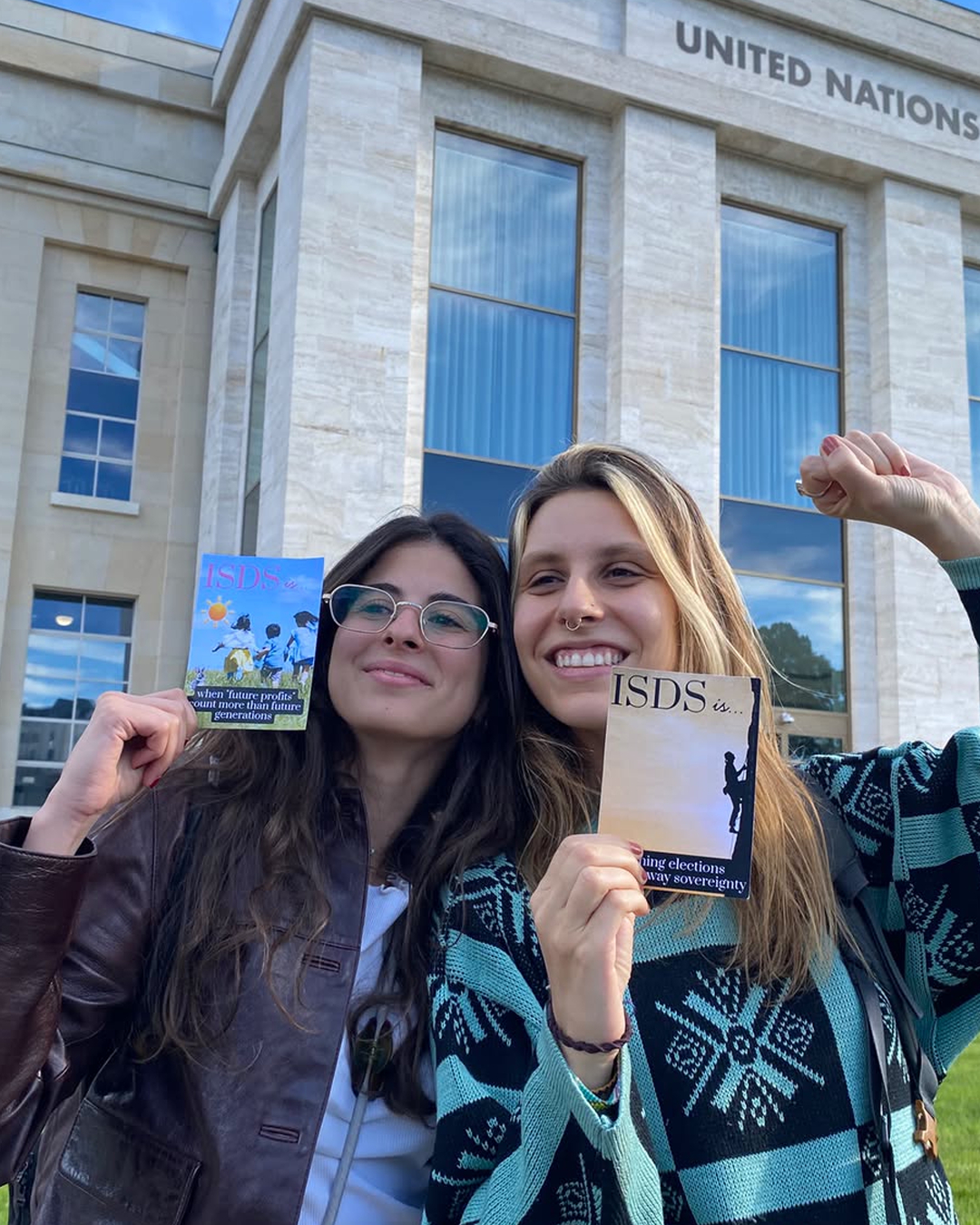
Rachmi Hertanti, Researcher at the Transnational Institute, explained that the European Union’s interest in gaining access to Indonesian minerals through the Energy and Raw Materials Chapter in the I-EU CEPA will only deepen the exploitation of Indonesia’s extractive resources and exacerbate environmental damage and increase the potential for human rights violations experienced by the community serving in industrial areas. Furthermore, the competition for important mineral materials in the world will open up opportunities to increase the appeal of ISDS by foreign investors. Furthermore, setting up the Investor-State Dispute Settlement (ISDS) mechanism in the I-EU CEPA Investment chapter
will only reopen Indonesia’s potential to be sued again by multinational corporations in international arbitration institutions such as ICSID.
“Previously, Indonesia lost at the WTO over a lawsuit by the European Union regarding the policy of limiting nickel exports and domestic processing obligations. However, this case should not be exchanged for a trade deal that will deepen the climate crisis and ongoing environmental damage. The IEU CEPA will only encourage the expansion of the extractive economy in Indonesia. And, this is a serious problem in realizing a just transitional agenda for the Indonesian people,” explained Rachmi Hertanti, Researcher from the Transnational Institute.
Anang F. Sidik, Researcher from Kaoem Telapak explained that it would be difficult for the I-EU CEPA to indirectly encourage changes in environmental management policies, especially palm oil plantation governance, if there was no strong commitment from both parties. The Trade and Sustainable Development (TSD) chapter which is planned to make the I-EU CEPA a “green FTA” also does not show the seriousness of the commitment of both parties in protecting the environment and protecting human rights,” said Anang, F. Sidik.
The European Union issued regulations on Deforestation Free Products or the European Union Deforestation Regulation (EUDR) in late 2022. This law prevents commodities such as palm oil, timber, coffee and cocoa from entering the European Union market if they are proven to cause deforestation and land degradation. This rule then forces all producing countries to comply with all the principles and criteria regulated in it. Many parties, especially the Government of Indonesia itself, consider this step a form of trade barrier, especially since the law is implemented unilaterally. So continuing the I-EU CEPA without considering other aspects such as how the regulatory mechanism for environmental protection and human rights protection and consideration of the European Union’s policy situation will undermine Indonesia’s own position,” concluded Anang F. Sidik.
Social Justice Crisis
Furthermore, Lutfiyah Hanim, Senior Researcher for Indonesia for Global Justice (IGJ) provided critical notes so that these negotiations were open and democratic. Because later the impact of the IEU CEPA Agreement will also have an impact on the wider community. As in “the issue of agriculture and seeds, we gave a warning to Indonesian negotiators not to join as members of UPOV 1991. Because it would have the potential to be detrimental to seeds and small farmers in Indonesia. Matters like this must be paid attention to, because we must not castrate the sovereignty of our own nation,”said Lutfiyah Hanim.
For this reason, we from “civil society groups also call on the Indonesian government to reject the European Union’s proposal that requires Indonesia to become a member and or implement the 1991 UPOV, or impose obligations, regulations and other restrictions according to the 1991 UPOV. The 1991 UPOV Convention for the protection of plant varieties constitutes a rigid and unsuitable legal framework for smallholders especially in developing countries, such as Indonesia. The UPOV Convention 1991 prohibits farmers from saving seeds and replanting seeds from their own fields for most types of crops,” added Hanim.
In digital trade, Olisias Gultom from the Sahita Institute (Hints) alluded to “digital trade rules carried out through CEPA (Comprehensive Economic Partnership Agreement) negotiations
will make Indonesia and other developing countries continue to be developing countries and depend on developed countries. Efforts to collect large-scale data from developing countries to developed countries must be stopped,” said Olisias.
Ferry Norilla from the Indonesia AIDS Coalition (IAC) who continues to assist HIV patient groups stated, “Free trade agreements, including the I-EU CEPA, hurt and have a serious impact on access to medicine and health. The patient group categorically rejects the negotiations being carried out by the Indonesian government and the European Union because it could have a negative impact on efforts to make the community healthy.” This is due to the TRIPS Plus provisions proposed by the European Union. The TRIPS Plus provisions apply stricter protection standards than TRIPS, the impact will further strengthen monopolies, increase drug prices and eliminate the potential for generic drug production,” he concluded.
In terms of employment issues, the Chairperson of the People’s Struggle Unit (KPR) emphasized that “The Indonesian government and the EU should not take cover in the face of environmental protection and job creation in the interests of Indonesia’s economic liberalization. If you want to carry out economic liberalization by driving the principles of human rights, women, the environment and social welfare, both parties should correct policies that are contrary to the spirit of these principles. This is tantamount to lying to the people for the benefit of human and natural exploitation,” said Herman Abdulrohman.
MKE Coalition demands
The Indonesian civil society coalition for economic justice (Koalisi-MKE) has observed this negotiation urging the Indonesian government to immediately stop the IEU CEPA negotiations because it will legitimize the Job Creation Law/Perppu Cipta Kerja which is against the Indonesian constitution. Also asking the government to respect and implement the Indonesian Constitutional Court decision No.91/PUU-XVIII/2020.
In this case the coalition urges the government to be transparent in all international trade agreement negotiations including the I-EU CEPA negotiations by taking into account the opinions and aspirations of civil society in responding to the I-EU CEPA. The MKE Coalition agreed to continue to monitor and oversee these negotiations. This week we will also write to the Indonesian government and the EU government to listen and pay attention to the voice of the public in Indonesia.
The Indonesian Civil Society Coalition for Economic Justice:
- Indonesia for Global Justice (IGJ)
- Indonesia AIDS Coalition (IAC)
- Serikat Petani Indonesia (SPI)
- Konfederasi Serikat Buruh Seluruh Indonesia (KSBSI)
- Transnational Institute
- Kesatuan Perjuangan Rakyat (KPR)
- Ekologi Maritim Indonesia (EKOMARIN)
- Kaoem Telapak
- Wahana Lingkungan Hidup (Walhi)
- Sahita Institute (HINTS)
- Solidaritas Perempuan (SP)
- FIAN Indonesia
More Information, contact:
- Rahmat Maulana Sidik, Executive Director of IGJ – +62 812-1002-5135
- Herman Abdulrohman, Chairman of KPR – +62 822-1342-6109
- Olisias Gultom, HINTS – +62 821-1079-9925
- Ferry Norilla, IAC – +62 856-9999-320
- Rachmi Hertanti, Researcher of Transnational Institute – +62 817-4985-180
- Anang F. Sidik, Researcher of Kaoem Telapak – +62 858-2252-4248